Buying guide
How to Choose a Rug for Your Living Room
August 7, 2026 · Plynth · 8 min read
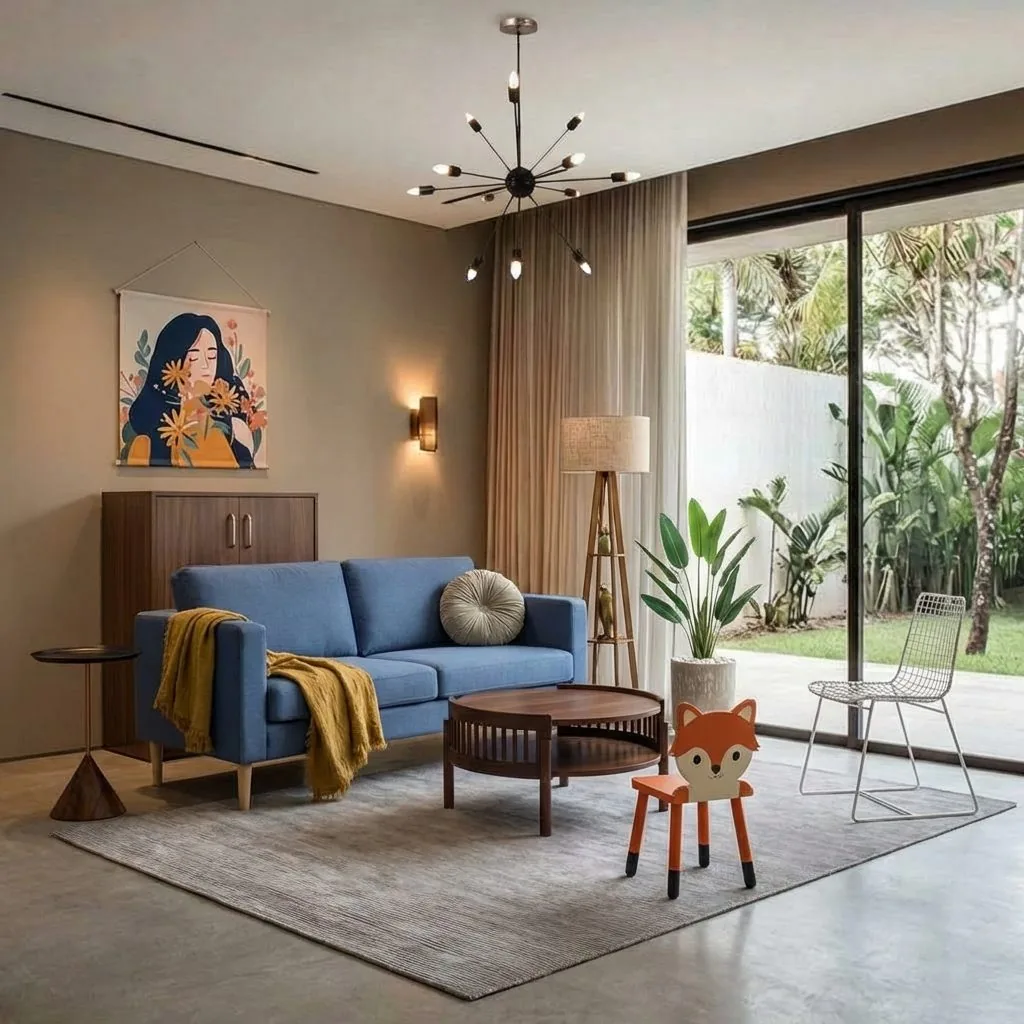
Most people buy the sofa first, the coffee table second, and the rug last — usually in a hurry, usually too small, usually because the floor looked bare. That order is backwards. The rug is the one piece that decides whether the whole seating area reads as a room or as a few pieces of furniture standing near each other. Get it right and everything else falls into place. Get it wrong and it doesn't matter how good the sofa is.
Here's how to not get it wrong.
The rug does more than you think
A rug's actual job is to ground the seating. It draws a line around the sofa, the chairs, and the coffee table and says: this is one thing, this is a place to sit. Without it, the furniture floats on a hard floor with nothing holding it together, and the room feels like a showroom that hasn't finished being set up. In a small flat this matters even more; our small living room guide starts with the rug for exactly this reason. It's also why the sofa and rug take nearly half the money in a ₹1.27 lakh living room, and why a wool rug is the first layer of a warm winter living room.
It's also the biggest soft surface most living rooms have. It sets the warmth of the whole space — underfoot in the morning, and visually, the colour and texture that everything else sits against. A cold tiled floor with a good wool rug on it is a completely different room to the same floor bare. That's why it's worth thinking about properly instead of grabbing whatever's on the shelf at the right price.
Size is the mistake almost everyone makes
If you remember one thing from this article, remember this: the rug is too small. It nearly always is.
The most common version is a rug that sits marooned in the middle of the room with all the furniture ringed around the outside, none of it touching. It makes the sofa and chairs look like they're floating on the bare floor with a small mat placed between them. The room feels disconnected from itself, and no one can quite say why.
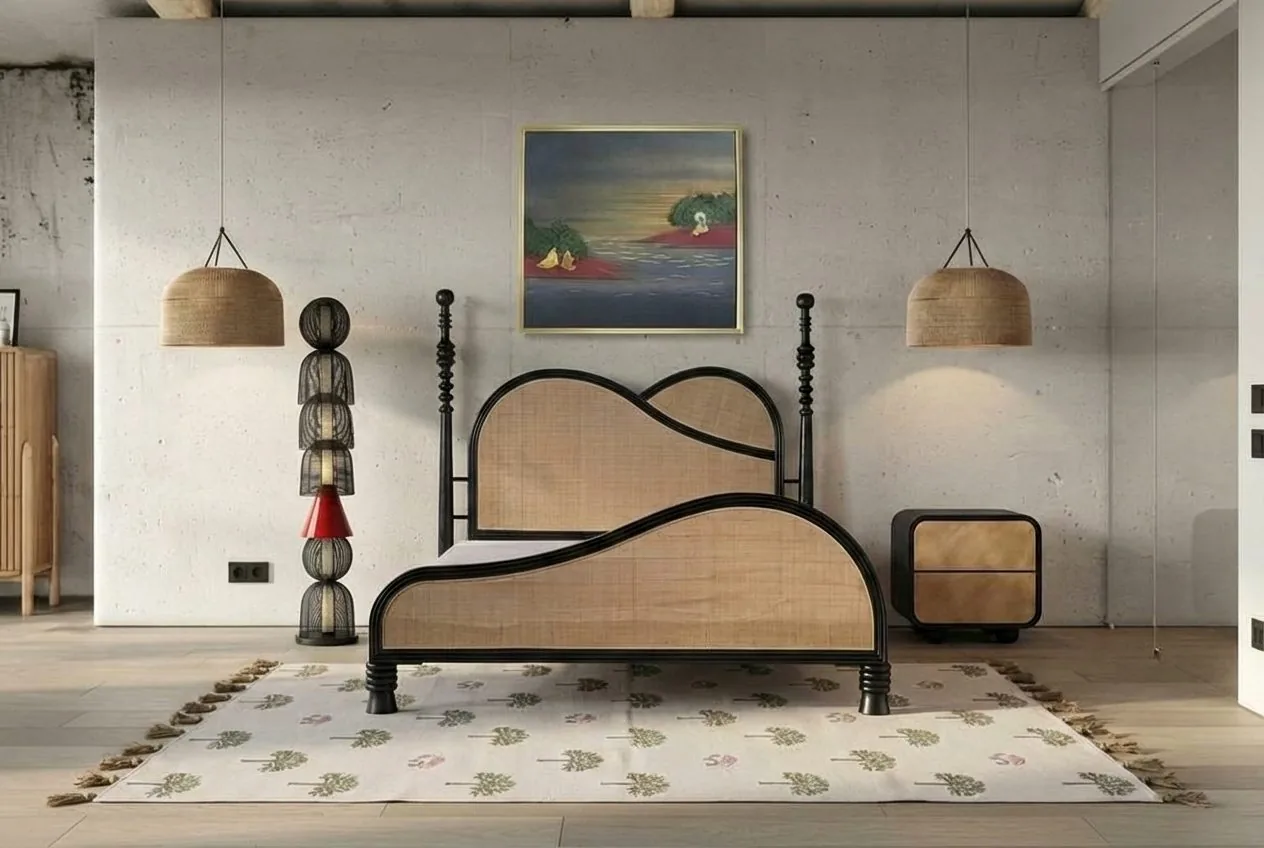
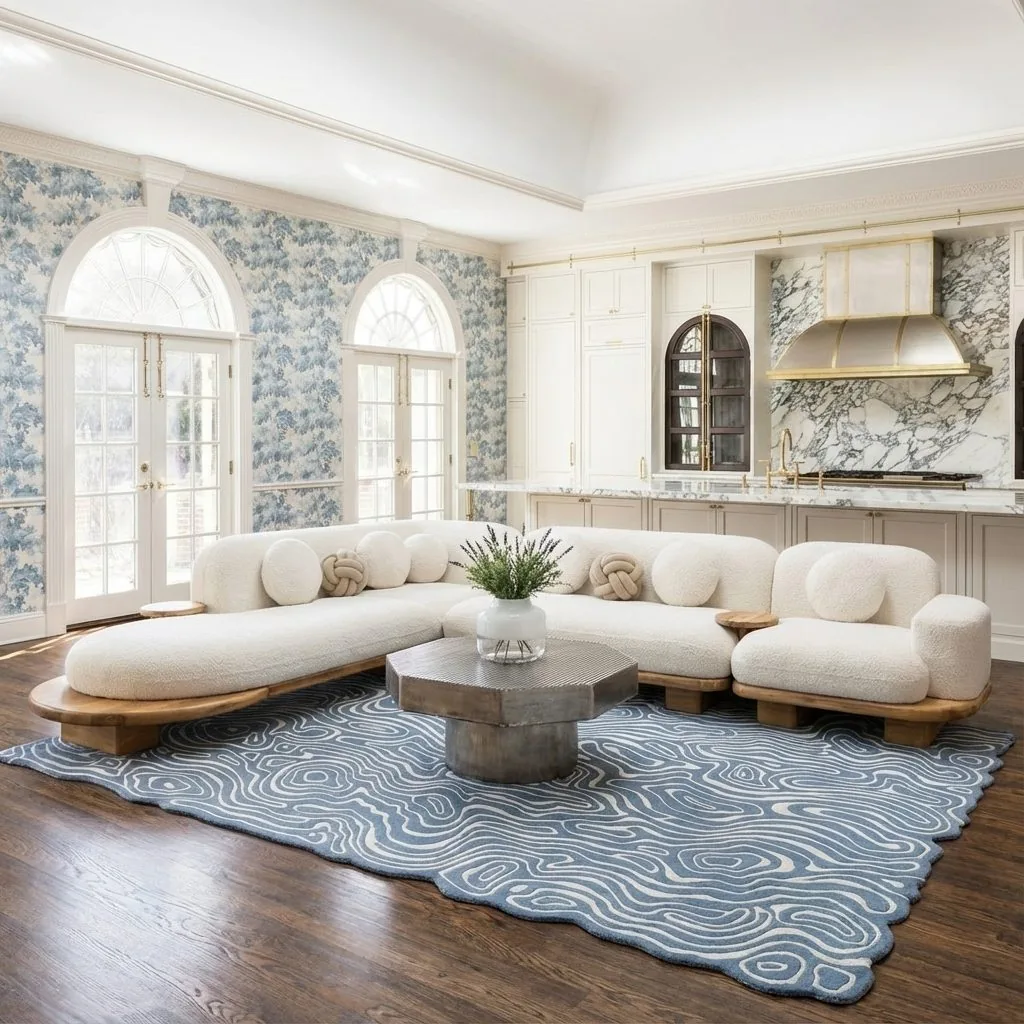
The rule is simple. At least the front legs of your sofa and chairs should sit on the rug. Ideally, all the legs sit on it. When the furniture stands on the rug, the rug pulls the whole arrangement into one grounded group. When only the coffee table is on it, you've just bought a floor protector.
For a rough guide in Indian living rooms: a standard 10x12 ft room usually wants a 5x8 or 6x9 ft rug at minimum. A larger hall with a big sectional often needs 8x10 ft to get those legs on. When you're stuck between two sizes, go up. A rug that's slightly too big looks generous. A rug that's slightly too small looks like a mistake, every single time.
Hand-knotted vs hand-tufted: the honest version
This is where the price differences come from, and where salespeople get vague. So, plainly:
Hand-knotted rugs are tied by hand, knot by knot, on a loom. A single rug can take months. Nothing holds the pile in place except the knots themselves, which is why these last for decades — often longer than the person who bought them. They're the most durable rugs you can buy and the most expensive. Something like the Charlotte Hand-Knotted Woollen Rug from Obeetee sits at ₹26,250 and is genuinely heirloom-grade — the kind of thing that gets handed down, not thrown out. At the top of the range, the Wood Hand-Knotted Rug from The House of Things runs ₹84,900, and you're paying for a piece that will outlive most of your furniture.
Hand-tufted rugs are made by punching yarn into a backing cloth with a tool, then gluing a second backing on to hold it. Much faster to make, so much cheaper to buy. They're often softer and thicker underfoot than a knotted rug of the same price, which people genuinely like. The honest trade-off: the glued backing has a lifespan. In a high-traffic room over years, a tufted rug will show wear before a knotted one would. The Jabbing Hand-Tufted Woollen Rug from Obeetee starts at ₹2,130 — real wool, tufted, and a completely sensible way to get a good-looking rug into a room without a big spend. The Bithiah Hand-Tufted Wool and Viscose Rug, also Obeetee, sits a step up at ₹8,700 with a bit more sheen from the viscose.
The gap is real — ₹2,130 to ₹26,250 for wool rugs that both look good in a photo. What you're paying for at the top is lifespan and the depth of a hand-tied pile. Neither is wrong. It depends on how long you want it to last and how hard the room is on it.
Material: what actually survives an Indian home
The construction is how it's made. The material is what it's made of, and this is where the warm climate and busy households matter.
Wool is the default for a reason. It's warm, it's hard-wearing, it hides dirt well, and it springs back after furniture sits on it. It handles a high-traffic living room better than anything else at a normal price. If you have kids, pets, or just a lot of foot traffic, wool is the safe call — the Jabbing and the Charlotte are both wool, at opposite ends of the price range, and both will take a beating.
Viscose and banana-silk are the shiny ones. They catch the light and give a rug that soft sheen that reads as expensive in a photo. The Fusion Loom Knotted Banana-Silk Rug from Obeetee, at ₹6,810, is a good example — knotted, with that silky lustre wool doesn't have. The honest caveat: these fibres are less durable and less forgiving than wool. They mark, they can water-stain, and they don't love heavy traffic. Beautiful in a formal sitting room or a low-use space. Less ideal directly under the spot where everyone drops onto the sofa with a cup of chai.
For most Indian living rooms — warm, used daily, often shared with children or a dog — wool underfoot with a bit of viscose or silk mixed in for sheen is the sweet spot. The Bithiah wool-and-viscose blend is exactly that compromise: mostly the toughness of wool, a little of the shine.
How to think about budget
You can spend ₹2,130 or you can spend ₹84,900, and both are real rugs sold to real living rooms. The number isn't the point — the fit is.
If this is a rental, or a room you'll restyle again in a couple of years, or you just want the floor to stop looking bare without a big decision, start low. The Jabbing at ₹2,130 does the job. Get the size right and a ₹2,130 rug that's the correct size will always look better than a ₹20,000 rug that's too small.
If it's a room you're settling into, a mid-range wool-blend like the Bithiah at ₹8,700 or the Fusion Loom at ₹6,810 gives you real quality and some sheen without going near five figures. This is where most people should be aiming.
And if you're buying the rug you want to keep — the one that anchors the room for the next decade and beyond — that's when hand-knotted wool earns its price. The Charlotte at ₹26,250, the Haze Rug from The House of Things at ₹44,000, or the Wood Hand-Knotted at ₹84,900 aren't purchases you repeat. You buy one, once.
See it in your room before you spend
The hard part of buying a rug online is that you can't tell how the size, the colour, or the pattern will read against your actual sofa and your actual floor. A rug that looks perfect on a white studio background can fight with everything you already own.
This is what Plynth is for. Upload a photo of your living room, and see any of these rugs rendered under your real furniture — the right size, the right colour, before you've paid for anything. It takes about ten minutes, and it's a lot cheaper than finding out the ₹26,250 rug clashes after it's been delivered.
The rugs in this guide
- Jabbing Hand-Tufted Woollen Rug — Obeetee, ₹2,130 — hand-tufted wool, the sensible budget start
- Fusion Loom Knotted Banana-Silk Rug — Obeetee, ₹6,810 — knotted banana silk, for sheen
- Bithiah Hand-Tufted Wool and Viscose Rug — Obeetee, ₹8,700 — hand-tufted wool-and-viscose blend, toughness with a little shine
- Charlotte Hand-Knotted Woollen Rug — Obeetee, ₹26,250 — hand-knotted wool, heirloom-grade
- Haze Rug — The House of Things, ₹44,000 — premium, keep-it-for-a-decade
- Wood Hand-Knotted Rug — The House of Things, ₹84,900 — hand-knotted, top of the range
Pick the size first, the construction second, the price last — and see it in your own room before you commit. Browse the full set of looks at plynth.studio/curated.
Built on a real room
This article uses a published Plynth look. Every product in it is linked.
Questions people ask
- What size rug should I buy for a living room?
- Big enough that at least the front legs of the sofa and chairs sit on it. In a 10×12 ft Indian living room that is usually 6×9 ft or 8×10 ft, not 5×7.
- Hand-knotted or hand-tufted: which rug should I buy?
- Hand-knotted lasts decades and costs several times more. Hand-tufted wool is the value pick for most homes. The guide also compares wool, cotton and jute.
- How much does a good living room rug cost in India?
- A decent-size hand-tufted wool rug from a brand like Obeetee starts under ₹15,000. Hand-knotted rugs run far higher.
Style your room the way you imagined it
Upload a photo of your space and see it restyled with real, shoppable products in minutes.
Start styling free